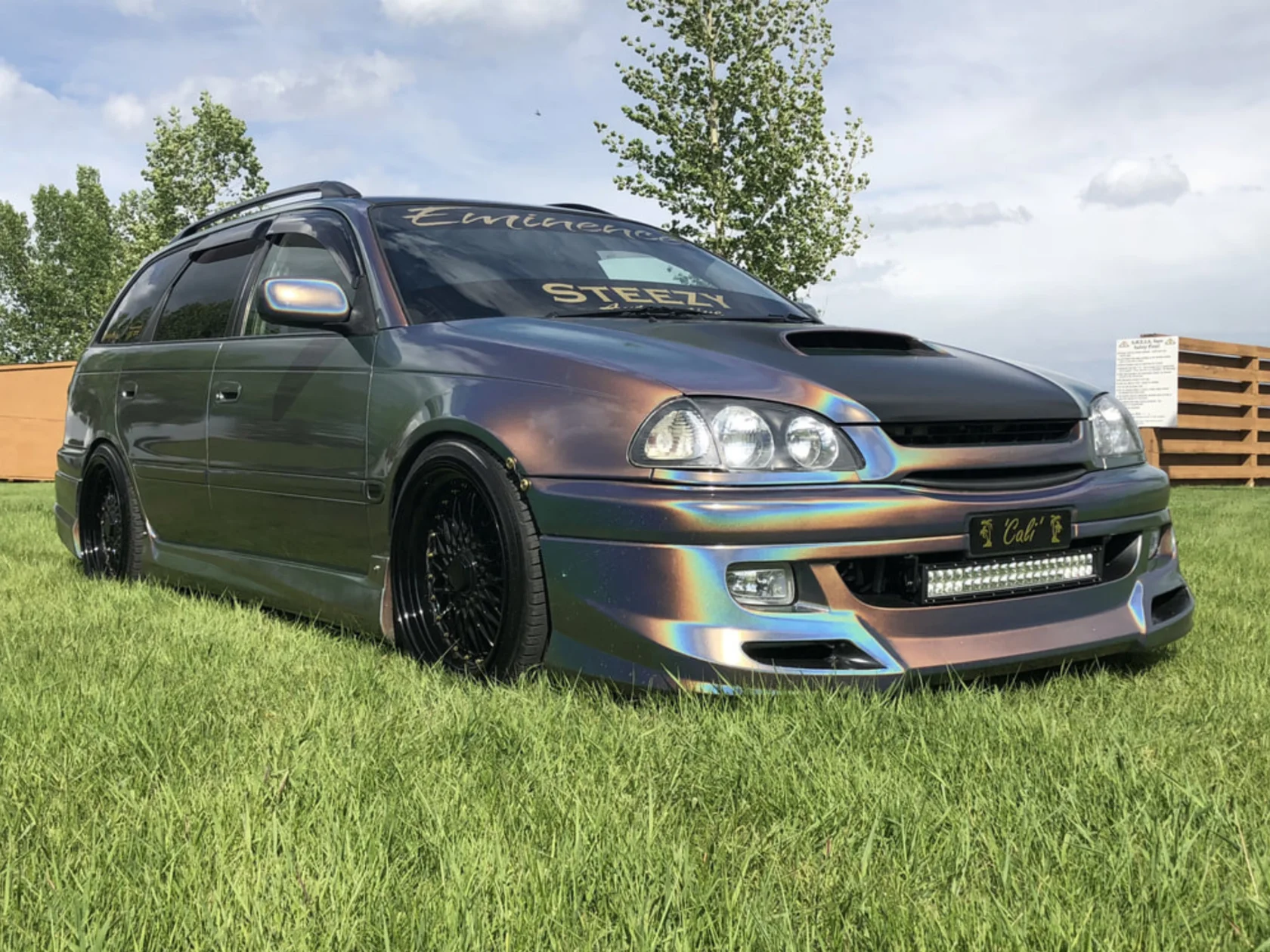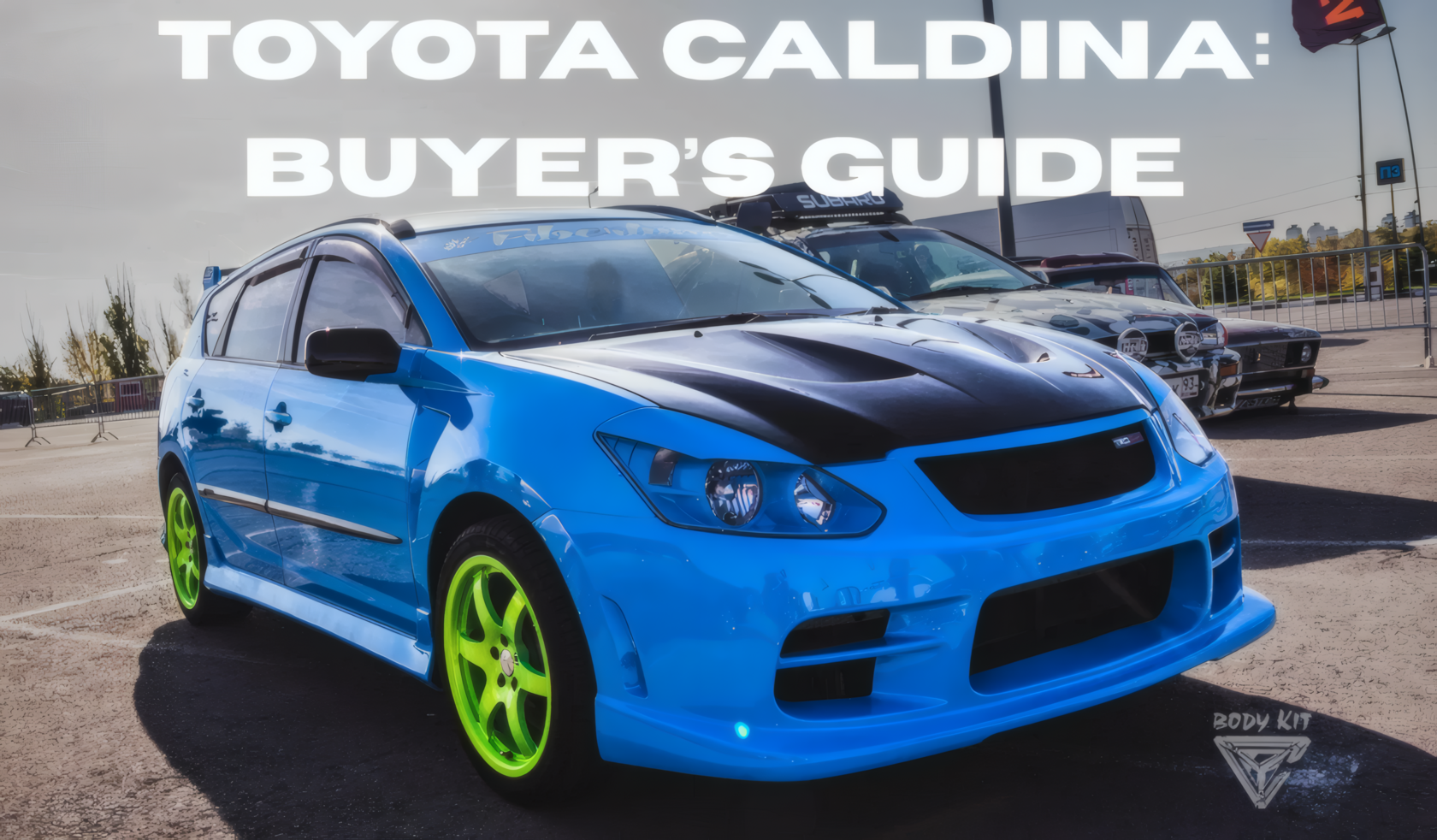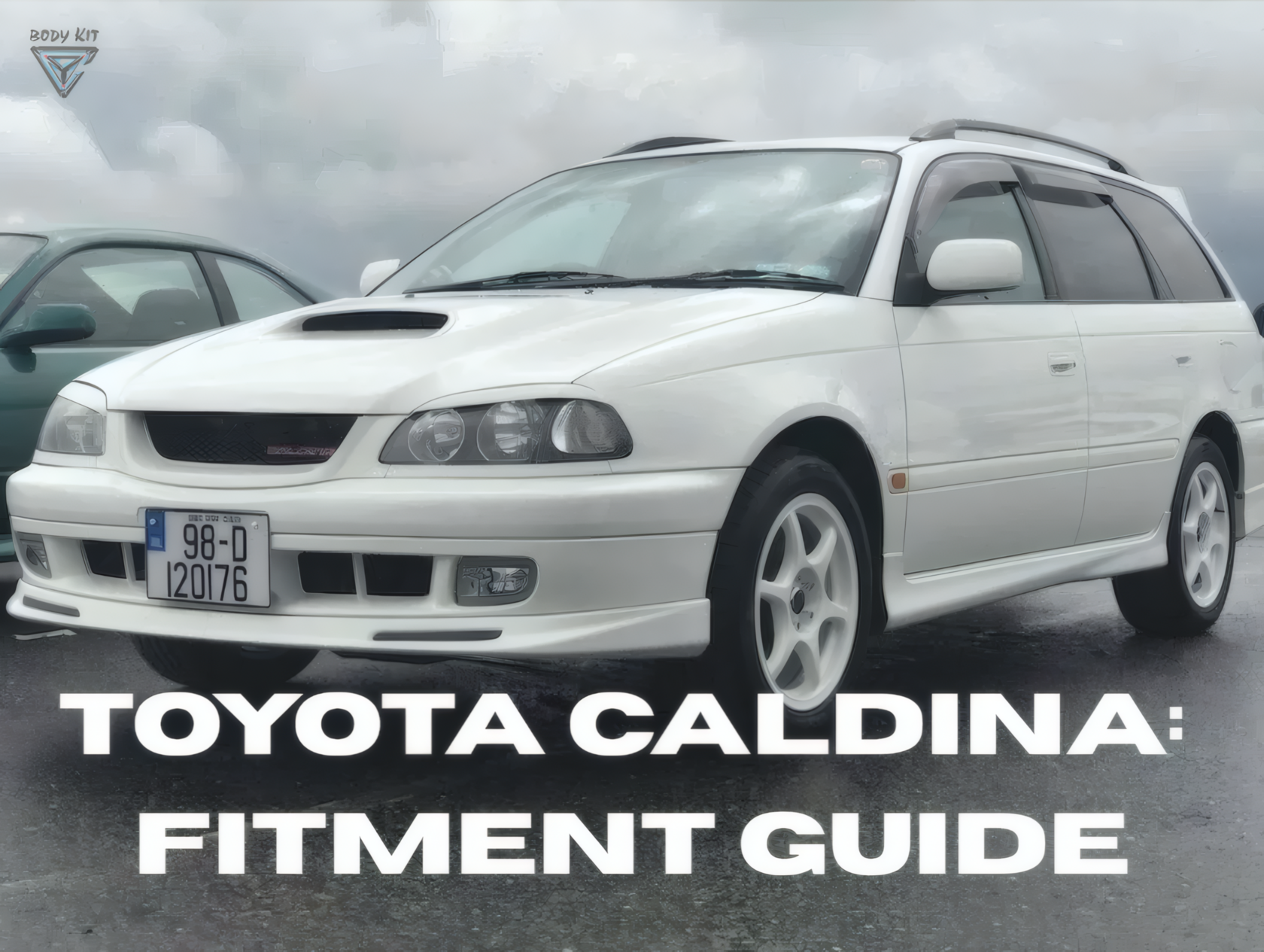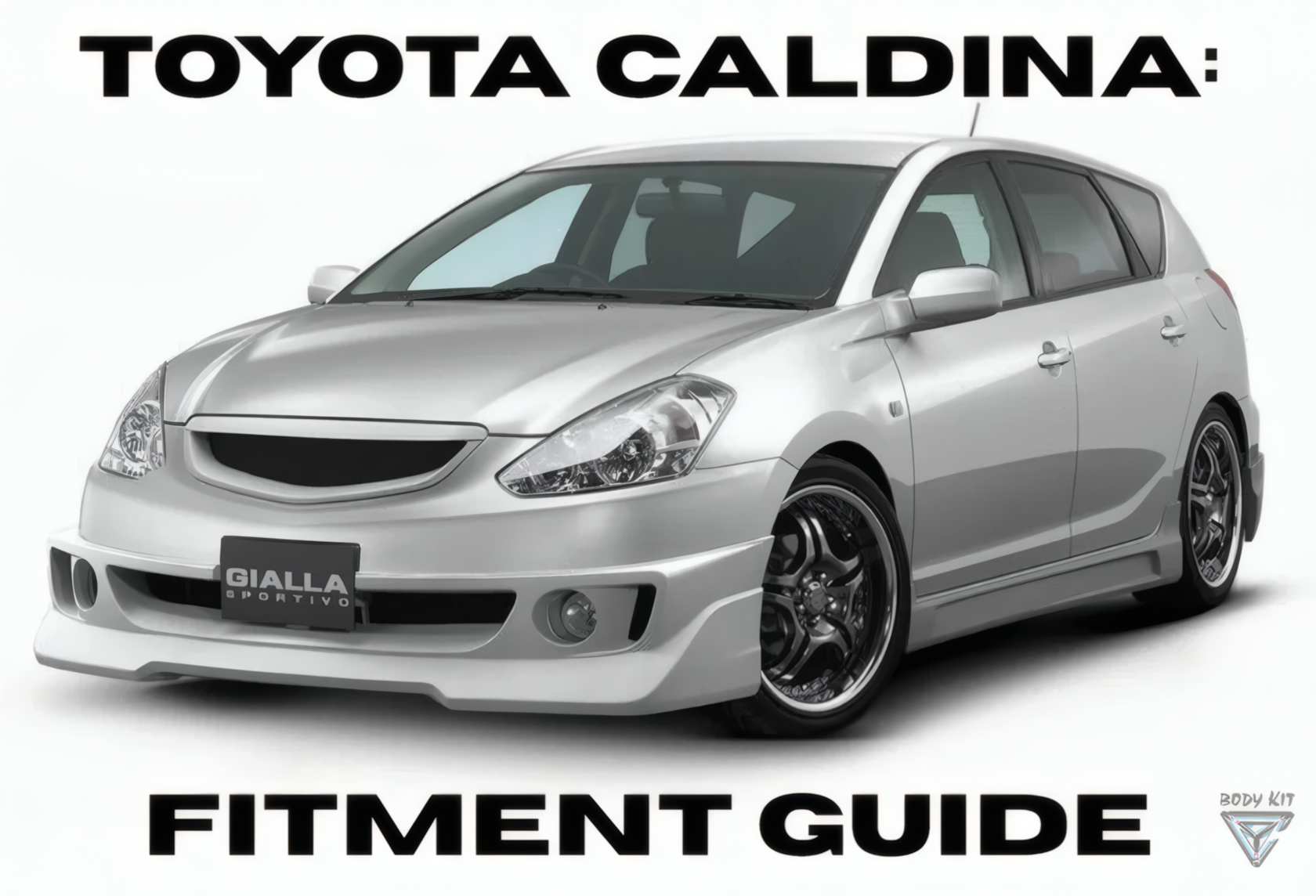
The Toyota Caldina was introduced in May 1992 as a compact station wagon built on Toyota's T190 platform, sharing its floorpan with the Corona and Carina E. In Toyota's chassis coding system, the letter prefix identifies the engine family ("S" for 3S-series, "A" for A-series, "C" for diesel), followed by the platform number and body variant code. The standard T190 used the 3S-FE inline-four producing 125 ps, a practical family estate with no performance intent. The GT-Four changed that.
The ST195 (first generation) and ST215 (second generation) GT-Four variants fitted the 3S-GTE turbocharged engine, the same unit used in the Celica GT-Four Carlos Sainz Edition and the MR2 Turbo. In the Caldina's wagon body, the result was 245 ps, viscous-coupling 4WD, and full cargo capacity. The ST215 became the gray import of choice in Australia and New Zealand: fast, daily-usable, and underpriced for its performance.
The third generation (T240, 2002–2007) replaced the GT-Four with the ZZT246, fitted with Toyota's 2ZZ-GE, a 1.8L VVTL-i engine producing 190 ps. The same engine appeared in the Lotus Elise 111R and Celica GT-S. The VVTL-i variable valve lift system activates at approximately 6,200 rpm, producing a sharp step in power output above that point. It was the last performance Caldina, and the only one built around a naturally aspirated motor.
Production ended in 2007 with no direct successor. The Caldina was developed for the Japanese domestic market and never officially sold in Europe or North America, which limits parts availability and aftermarket support relative to platforms with official Western distribution. For full chassis genealogy, see the Toyota Caldina Wikipedia article.